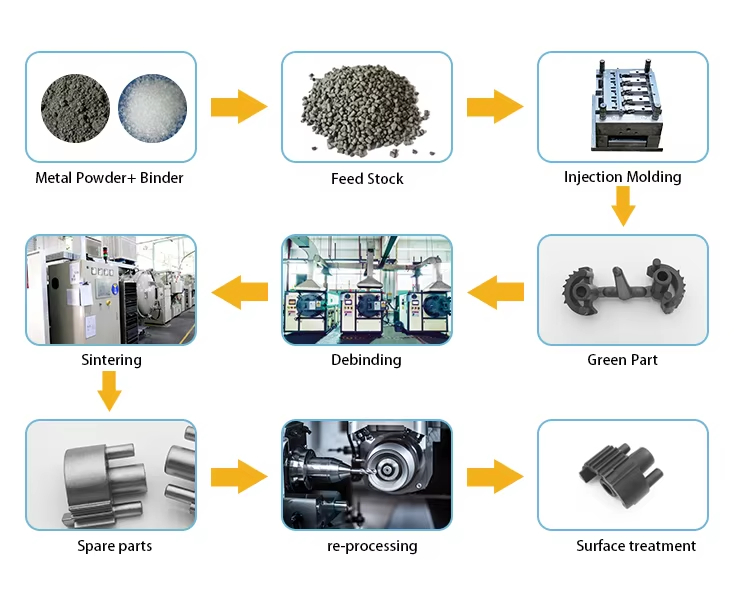
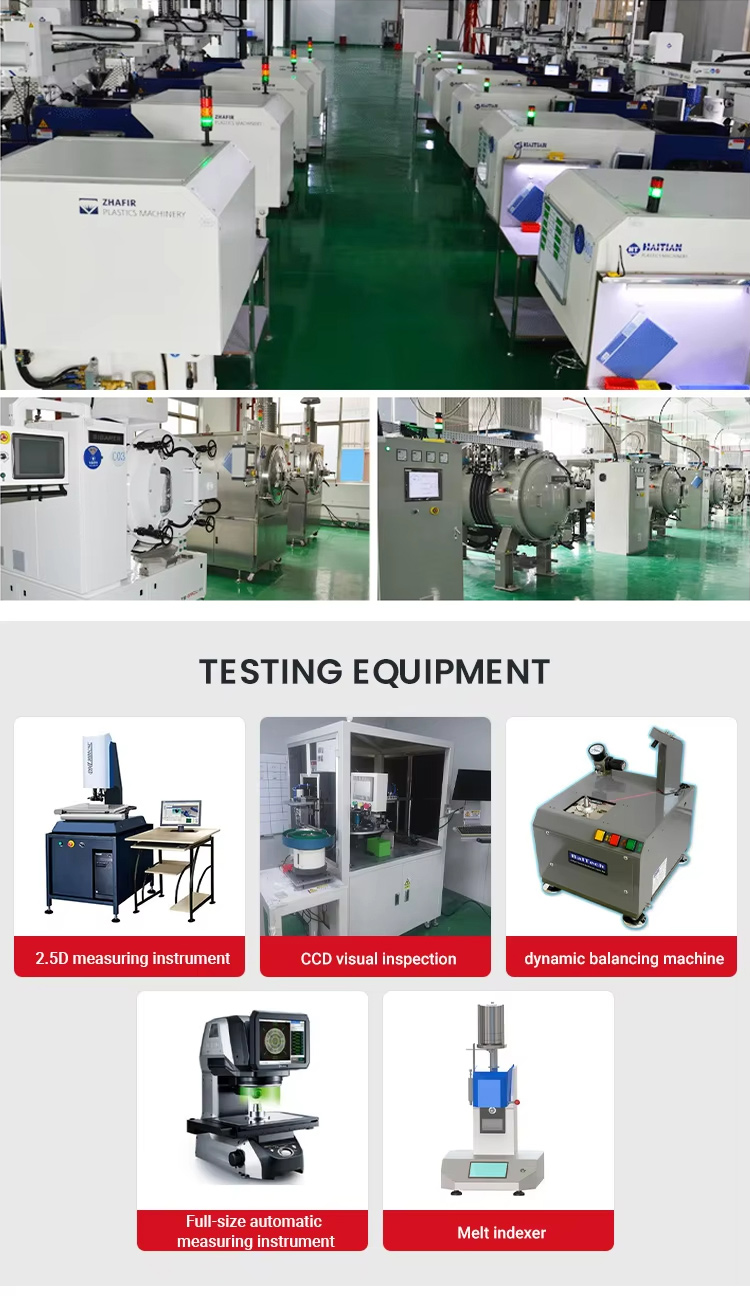
For engineers designing for high-volume applications, the multiple-cavity tooling approach significantly improves throughput while maintaining uniform part quality. This step also provides excellent design flexibility, as MIM can accommodate complex geometries that would otherwise require costly secondary operations.
Debinding Process
The parts then move through the first stage of debinding. The binder systems used in the formulation of MIM feedstock requires a two-step debinding process. Although there are several methods to remove binder, metal injection molding uses two primary methods to remove the binders during this stage, catalytic and solvent. Catalytic debinding uses fuming nitric acid to remove some of the binder. In contrast, solvent debinding involves soaking green parts in a bath for several hours. This process removes most—but not all—of the binder, preparing the parts for sintering.
The binder removal stage is critical to ensuring the integrity of the final component before sintering since any residual binder left in the part can negatively impact the sintering process, potentially causing defects or inconsistencies. Engineers must manage time and temperature carefully. This ensures that the binder is fully removed without compromising the part’s structure. Once this process is completed the part is considered a “brown part”.
MIM Sintering Process
The MIM sintering stage is where the brown parts are placed in a high temperature furnace. The part is heated near its melting point, all the remaining binder is completely removed, and the metal particles are bonded together. Parts up to 100 grams in weight can be effectively processed, making MIM an excellent choice for small, high-precision components.
The part then shrinks and densifies, and the final strength and geometry of the metal part are formed. Engineers benefit from this process because it produces near full-density metal parts, often achieving 96-98% of wrought material properties. This means MIM parts can withstand demanding operational conditions while maintaining excellent dimensional accuracy.
Secondary Operations
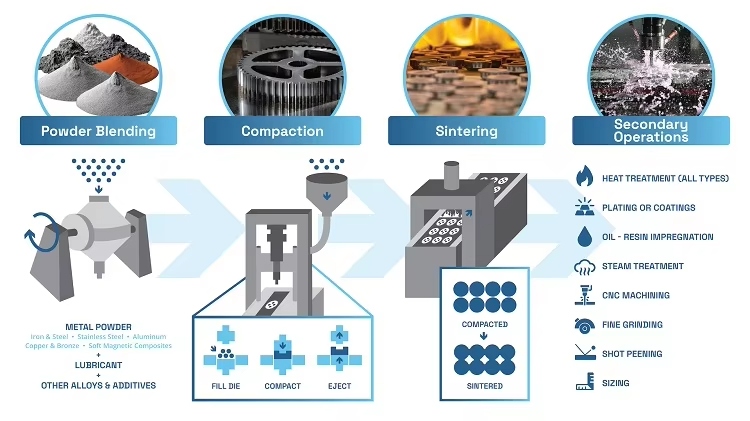
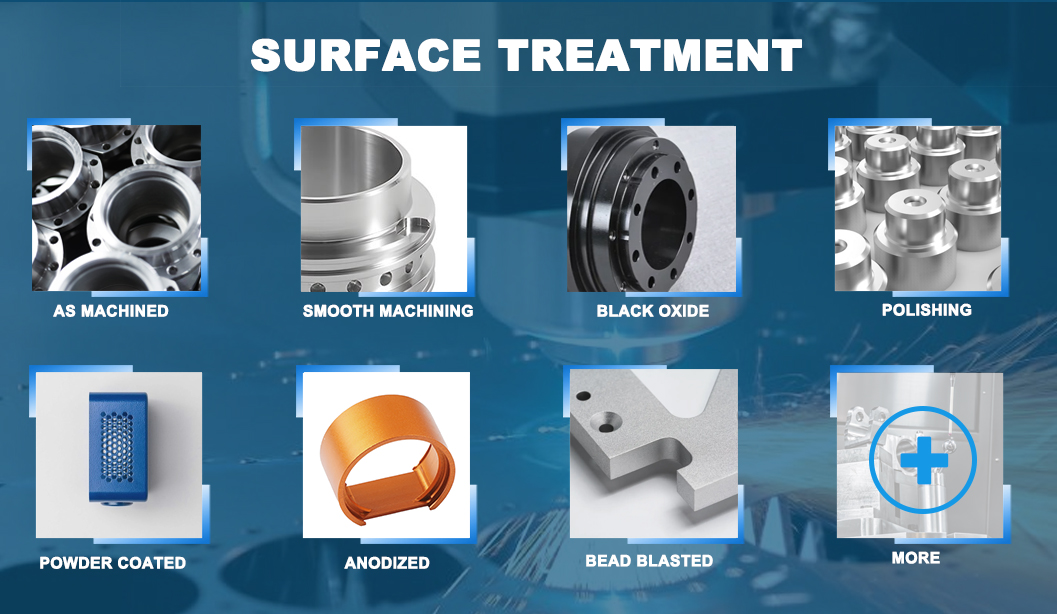
After sintering, metal parts can then be sent to additional operations to improve dimensional control, achieve tighter tolerances, increase mechanical properties, and visual appearance, such as heat treating and coating. These are called secondary operations and are accomplished in-house. Finished MIM parts are manufactured to around 98% theoretical density of wrought metals resulting in similar mechanical properties.
For applications requiring extreme precision, post-processing steps such as machining, polishing, or plating can further refine part characteristics. Engineers should assess the cost-benefit ratio of these secondary operations to determine the most efficient path to final part production.
MIM Process Advantages
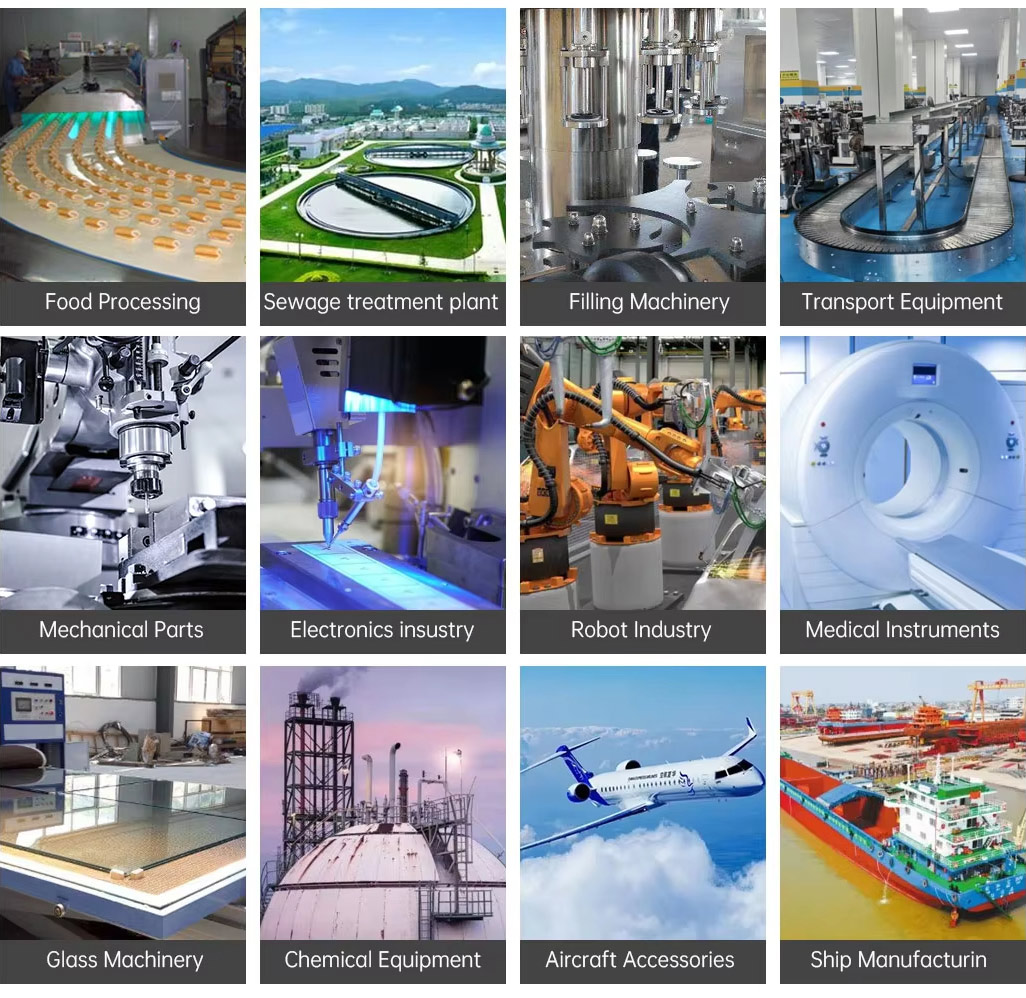
The Metal Injection Molding (MIM) process offers a unique combination of design flexibility, material strength, and cost efficiency. It enables the production of complex, high-precision components with tight tolerances, making it ideal for industries such as medical, aerospace, and electronics. Compared to traditional machining or casting, MIM reduces material waste and allows for high-volume production of intricate parts with superior mechanical properties.
Additionally, MIM’s ability to produce near-net-shape components eliminates the need for extensive machining, reducing labor costs and material waste. Engineers can leverage this process to scale production while maintaining part-to-part consistency, even for challenging geometries.
Materials Used in the MIM Process
The Metal Injection Molding (MIM) process exclusively utilizes fine metal powders to produce high-performance components. Common materials include stainless steel, low-alloy steel, tool steels, and specialty alloys, each chosen for its strength, corrosion resistance, or unique mechanical properties. These metals make MIM an ideal solution for demanding applications in medical, aerospace, and high-tech industries.
For engineers designing mission-critical components, material selection plays a crucial role in achieving optimal performance. Stainless steel, for example, offers excellent corrosion resistance and mechanical strength, making it a preferred choice in harsh environments. By carefully selecting the right alloy, engineers can optimize component longevity and functionality within the Metal Injection Molding Process.